Cost of Living in Salt Lake City, Utah (2026 Guide)
It usually starts with a simple question.
Can I afford to live here?
But after a while, that question changes. It becomes less about numbers and more about what those numbers give you. What your days look like. How your time feels once you settle in.
Salt Lake City sits somewhere in between. It is not as expensive as larger coastal cities, but it is not as low as people sometimes expect either. And most of that comes down to housing.
Housing
Housing is what shapes the experience here more than anything else.
Most homes fall somewhere between about 550,000 and 650,000 depending on the area. Rent usually lands between 1,500 and 2,000 a month.
Where things start to shift is location.
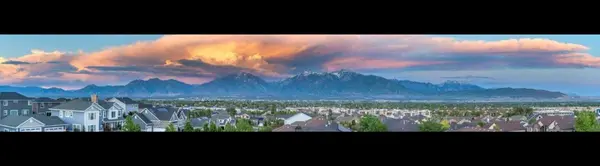
Closer to the center, homes are often older and a little tighter. As you move south, into places like Draper or South Jordan, you start to see more space, newer construction, and neighborhoods that feel more open.
For a lot of people, that is where the decision begins to take shape.
If you want to get a feel for what that looks like right now, you can look at Draper homes for sale, Sandy homes for sale, or South Jordan homes for sale.
Monthly costs
Outside of housing, things tend to feel steady.
Utilities usually land somewhere between 150 and 250 a month depending on the home and the season. Summers are warm. Winters bring some cold. It balances out over time.
Groceries, gas, and everyday expenses feel pretty close to what you would expect in a mid sized city. Nothing stands out too much in either direction.
After a while, the predictability is part of what makes it work.
Property taxes
This is one area that surprises people.
Utah has relatively low property taxes compared to many other western states. It is not something you notice right away, but over time it can make a meaningful difference in what homeownership actually costs.
It is one of those quieter advantages that adds up.
Income and affordability
Most people living comfortably here fall somewhere between 70,000 and 120,000 a year, depending on lifestyle and housing choices.
Some people choose to stay closer to the city and adjust space. Others move a little further out and gain more room.
There is no single way to do it. Just different ways to make it fit. If you are looking to be a little closer to the city, but still want the feel of the mountains and nature, check out Millcreek homes for sale and Cottonwood Heights homes for sale.
Work and opportunity
For many people, the cost of living here is closely tied to something else.
Work.
Just south of Salt Lake City, around Lehi and the Point of the Mountain, there is a growing tech corridor often referred to as Silicon Slopes. It has quietly become one of the main drivers behind the area’s growth.
Large companies and smaller startups both operate here, with a strong focus on software, cloud technology, and newer industries like artificial intelligence and semiconductor manufacturing. Over time, it has created a steady demand for jobs and drawn people in from outside the state.
The area continues to expand north into Salt Lake County, which which is why Sandy, Draper, and South Jordan have become so popular. They sit right in between Silicon Slopes and downtown Salt Lake City with the mountains and recreation at your doorstep to the East. It's the sweet-spot for those who are looking for access to the outdoors, a short commute to work, and convenience to downtown Salt Lake City.
Some people choose to live closer to the city and commute south. Others settle nearer to Lehi or Draper to stay closer to work. They all offer wonderful benefits, with small to moderate differences in lifestyle and cost.
At the same time, access to the outdoors stays part of the equation. Even with that growth, it still feels possible to step away from work at the end of the day and shift into something quieter.
And for many people, that balance between opportunity and nature is what makes living here work long term.
How location changes everything
Salt Lake City is not just one place.
It is a collection of areas that each feel a little different.
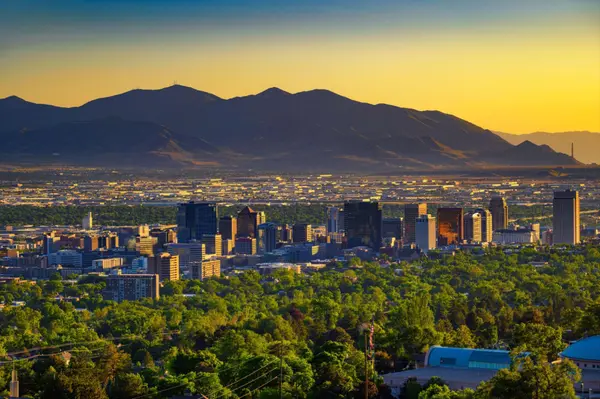
Living closer to downtown often means easier access and older homes with more character. Moving south into Draper, Sandy, or South Jordan usually brings newer homes, more space, and a different pace.
The numbers shift a little, and so does the experience.
What it feels like over time
You find your "spots". You'll find your local neighborhood restaurants, coffee shops, and favorite retailers. You'll find your favorite trails, green space parks, and peaceful nature spots for peace and reflection.
After a while, you start paying attention to everything else.
You notice how easy it is to get outside. How your weekends open up. How your day is not built entirely around getting from one place to another.
And at some point, the numbers stop being the main focus.
Common questions
Is Salt Lake City expensive?
It is moderately expensive, mostly because of housing, but still more affordable than many larger cities in the west. Daily costs of food, entertainment, and other everyday expenses are on the moderate to lower end.
Is it cheaper than California?
Absolutely. Most people moving from California find a noticeable difference, especially in housing.
What income do you need to live comfortably?
Most households fall between $70,000 and $120,000 depending on lifestyle. To live comfortably, you will want to be on the upper end of this range. Check out MIT's Living Wage Calculator for Salt Lake County, or the Utah Census Bureau Profile for additional income information.
If you are starting to figure out what works for you, the easiest next step is to see what is actually available.
Take a look at our snapshot statistics for Draper, Sandy, or South Jordan to learn more about local housing information. You'll find market trends, housing details like average size, year built, walkability, population, household sizes, education stats, family focused, income, and more. You'll start to understand which areas feel and look right.
Categories
Recent Posts